 Maslow’s Hierarchy of Needs is a motivational theory in psychology proposed by Abraham Maslow. It organizes human needs into five levels: physiological, safety, love and belonging, esteem, and self-actualization.
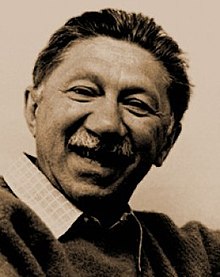 Abraham Harold Maslow (/ ˈmæzloʊ / MAZ-loh; April 1, 1908 – June 8, 1970) was an American psychologist who created Maslow's hierarchy of needs, a theory of psychological health predicated on fulfilling innate human needs in priority, culminating in self-actualization. [1]
/4136760-article-what-is-maslows-hierarchy-of-needs-5a97179aeb97de003668392e.png) Maslow’s hierarchy of needs is a motivational theory that explains how human needs build from basic to complex. It proposes that people must first meet essential physiological and safety needs before they can focus on higher-level needs like belonging, esteem, and self-actualization.
Maslow’s hierarchy of needs is a motivational theory that explains how human needs build from basic to complex. It proposes that people must first meet essential physiological and safety needs before they can focus on higher-level needs like belonging, esteem, and self-actualization. Abraham Maslow is one of the most influential psychologists of the 20th century. This article outlines his contributions to psychology.
 While the theories of motivation described earlier relate to basic biological drives, individual characteristics, or social contexts, Abraham Maslow (1943) proposed a hierarchy of needs that spans the spectrum of motives ranging from the biological to the individual to the social.