Directmemoryaccess (DMA) is a feature of computer systems that allows certain hardware subsystems to access main system memory independently of the central processing unit (CPU).
Direct Memory Access (DMA) is a technique used in computers and other electronic devices to allow peripherals (like hard drives, network cards, and sound cards) to communicate directly with the main memory (RAM) without involving the CPU.
Direct Memory Access (DMA) is a technique that allows hardware devices (like sensors, sound cards, or network cards) to directly read from or write to the system memory (RAM) without involving the CPU in each step of the data transfer.
Why Learn DMA? Direct Memory Access (DMA) is a game-changing feature that allows peripherals to transfer data directly to/from memory without CPU intervention. This dramatically improves system throughput, reduces CPU load, and enables true parallel processing. From streaming sensor data to high-speed communication interfaces, DMA is essential for building high-performance embedded systems and ...
Directmemoryaccess (DMA) is a technology that allows hardware devices to transfer data between themselves and memory without involving the central processing unit (CPU).
In this tutorial, we will discuss DMA which stands for directmemoryaccess. Firstly, we will see why we need to use DMA and what are the advantages of using DMA in modern computers and microcontrollers.
Transferring data between Storage and Memory can slow down a computer if the CPU has to manage every step. Direct Memory Access (DMA) is a mechanism that lets a dedicated controller take over this job, freeing up the CPU and making data movement faster and more efficient.
many bytes are moved. DirectMemoryAccess (DMA) To transfer large blocks of data at high speed, an . ternative approach is used, the DMA periperhal. Blocks of data are transferred between an external device and the main memory, . thout continuous intervention by the processor. It’s just anothe.
DirectMemoryAccess (DMA) is a feature or method used in computer systems that allows certain hardware components to access the system's main memory (RAM) without requiring the central processing unit (CPU) for each data transfer. DMA is generally used to improve data transfer efficiency between peripheral devices and memory.
Direct Memory Access (DMA) is a capability provided by some computer bus architectures that enables data to be sent directly from an attached device, such as a disk drive, to the main memory on the computer's motherboard.
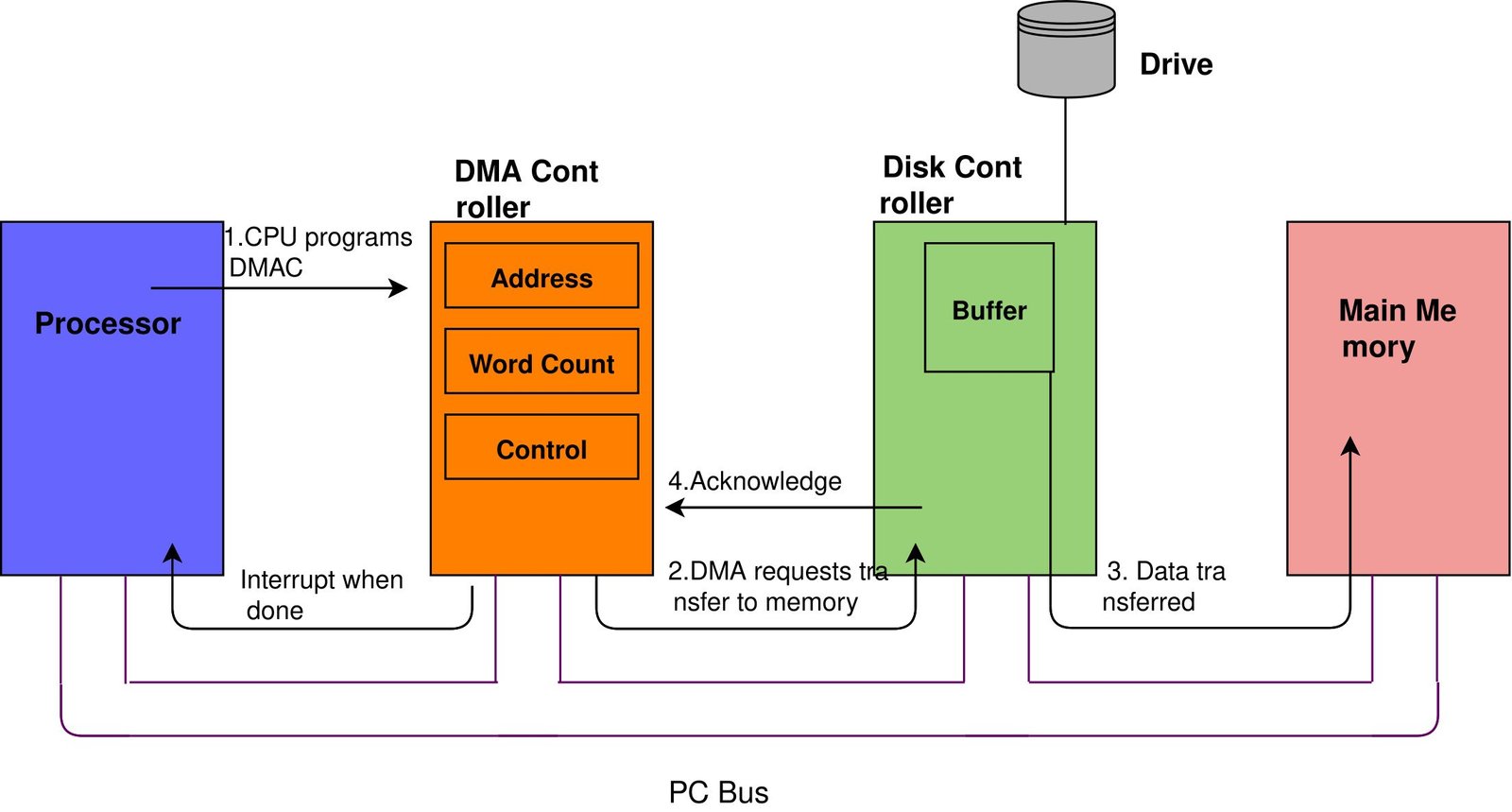 In this tutorial, we will discuss DMA which stands for direct memory access. Firstly, we will see why we need to use DMA and what are the advantages of using DMA in modern computers and microcontrollers.